The manufacturing industry is undergoing a profound transformation driven by automation, digital integration, and the relentless pursuit of higher precision. At the heart of this evolution lies CNC machining, a technology that has evolved from simple numerical control to sophisticated, multi-axis systems capable of producing components with micron-level accuracy. For industries ranging from aerospace and automotive to robotics and consumer electronics, the ability to manufacture complex aluminum components efficiently and reliably has become a critical competitive advantage.
The Rise of Automated Precision Machining
Automation in CNC machining has moved far beyond basic robotic loading and unloading. Today’s smart factories integrate artificial intelligence, real-time monitoring, and adaptive control systems that optimize cutting parameters on the fly. These systems use sensor data to detect tool wear, vibration, and thermal expansion, automatically adjusting feeds and speeds to maintain consistent quality across production runs.
For aluminum machining, automation is particularly transformative. Aluminum’s excellent machinability makes it ideal for high-speed production, but thin-walled structures common in modern components can be susceptible to vibration and deflection. Automated adaptive control compensates for these tendencies in real time, maintaining dimensional accuracy even on complex geometries.
Industry 4.0 and the Connected Shop Floor
The integration of Industrial Internet of Things (IIoT) networks has created unprecedented visibility into machining operations. Spindle loads, axis positions, coolant pressure, tool wear, temperature, and vibration data flow continuously from machines to manufacturing execution systems. This real-time data enables predictive maintenance, reducing unplanned downtime and extending equipment life.
Digital twin technology represents another leap forward. Engineers can simulate machining operations virtually before the first chip is cut, identifying potential problems and optimizing parameters without interrupting production. When the physical machine runs, sensors feed data back to the digital twin, creating a continuous learning loop that refines future performance.
Case Study: Precision Aluminum Structural Components
A recent project at Falcon CNC Swiss illustrates how advanced CNC automation and engineering collaboration can overcome complex manufacturing challenges. The project involved producing high-strength aluminum structural brackets for industrial automation systems and robotics.
The component required a lightweight rib-reinforced structure with multiple mounting surfaces and complex geometry. Critical dimensions needed to hold tolerances of ±0.02 mm. The material specified was aluminum alloy 6061-T6, chosen for its excellent strength-to-weight ratio and machinability.
The primary challenge was achieving weight reduction through thin-walled ribs without compromising structural rigidity. Processing thin-walled elements required precise cutting techniques to control vibration and material deformation. The multi-surface features also demanded careful workholding and machining strategy to maintain positional accuracy.
The 5-Axis Machining Solution
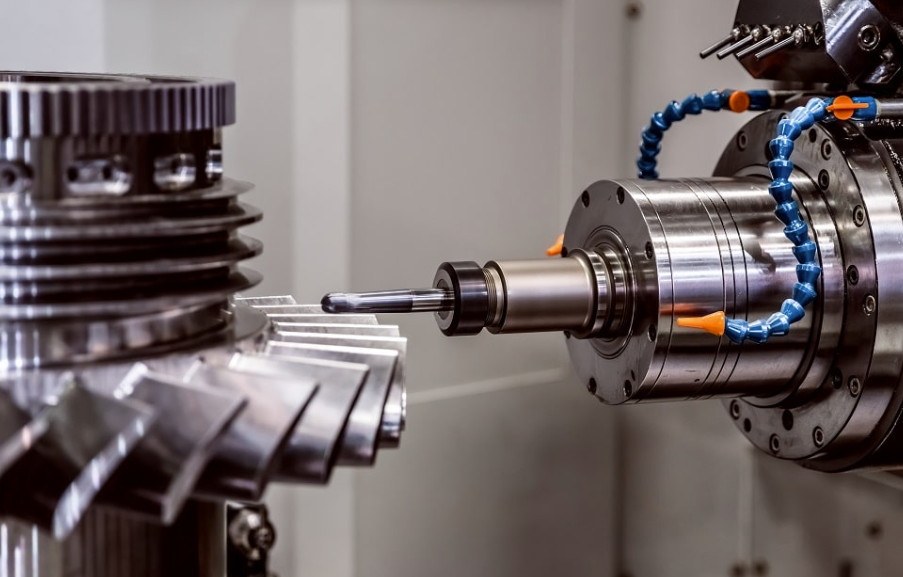
To meet these requirements, Falcon CNC Swiss implemented 5-axis CNC milling, which enabled machining of all features in a single setup. This approach eliminated the positioning errors that would accumulate through multiple setups on conventional 3-axis machines. The 5-axis capability also provided better access to complex features and improved surface finish on angled surfaces.
Engineers conducted a thorough Design for Manufacturability review before production began. This analysis optimized the rib design for weight reduction while maintaining mechanical strength. Tooling strategies, workholding methods, and cutting parameters were established and validated through prototype production.
See also: LegalTech Innovations Explained
Precision Inspection and Quality Assurance
Quality verification was integral to the production process. The project required precision inspection to verify that all dimensions met the ±0.02 mm tolerance specification. In-process probing verified critical dimensions between operations, allowing the machine to compensate for tool wear automatically. Final inspection using coordinate measuring machines confirmed that all components met specifications.
The successful completion of this project demonstrates the value of advanced CNC automation for complex aluminum components. The combination of 5-axis machining, DFM engineering, and rigorous inspection produced components that exceeded customer expectations while meeting tight production deadlines.
The Role of Swiss-Type Machining
For smaller, more intricate aluminum components, Swiss-type machining offers distinct advantages. The guide bushing design supports the workpiece close to the cutting point, providing higher stiffness and lower deflection. This is particularly valuable for long, slender, or thin-walled aluminum parts that would deflect under cutting forces on conventional lathes.
Swiss machining is preferred for components such as connectors, pins, shafts, fittings, and bushings. The process is particularly effective for parts with small or miniature diameters, long and slender geometries, multiple turned diameters, precision bores and threads, and closely controlled concentric features.
Aluminum Precision Components in Modern Industry
The demand for aluminum precision components continues to grow across multiple sectors. In aerospace, aluminum alloys provide the strength-to-weight ratio essential for fuel efficiency. In automotive, electric vehicles use more aluminum than their internal combustion counterparts for battery housings, motor frames, and cooling plates. In robotics and automation, aluminum structural components enable lighter, faster, more energy-efficient systems.
High-performance aluminum alloys like 6061 and 7075 are widely chosen for their strength, durability, and corrosion resistance. For industries requiring precision and reliability, aluminum precision components must meet exacting specifications. Achieving these specifications demands advanced machining capabilities, rigorous quality control, and engineering expertise.
The Economics of Automation
The business case for automation in precision CNC machining is compelling. Automated systems reduce labor costs, increase throughput, and improve consistency. Lights-out manufacturing enables 24/7 production with minimal supervision. Predictive maintenance reduces unplanned downtime and extends equipment life.
For component suppliers, automation translates directly to competitive advantage. Shops that have invested in automated systems can produce higher-quality components at lower cost and with shorter lead times than those relying on manual processes. This is particularly important for high-volume production, where consistency and efficiency are essential.
Looking Ahead
The next twelve to eighteen months will likely determine which manufacturing partnerships deliver durable advantages. Demand signals are clear: aluminum precision components are moving toward tighter tolerances, more complex geometries, and higher production volumes. Automation and digital integration will continue to reshape the industry.
The shops that have made the necessary investments — those that have built their operations around advanced CNC equipment, automated quality control, and a stable, skilled workforce — are positioned to capture the most demanding programs. For customers, that translates into predictability, which in today’s uncertain environment is worth more than a small discount on the unit price.
In an era where every component matters, the combination of advanced technology and proven material expertise has never been more important. The companies that embrace this reality will lead their industries forward. Those that don’t will struggle to keep pace.